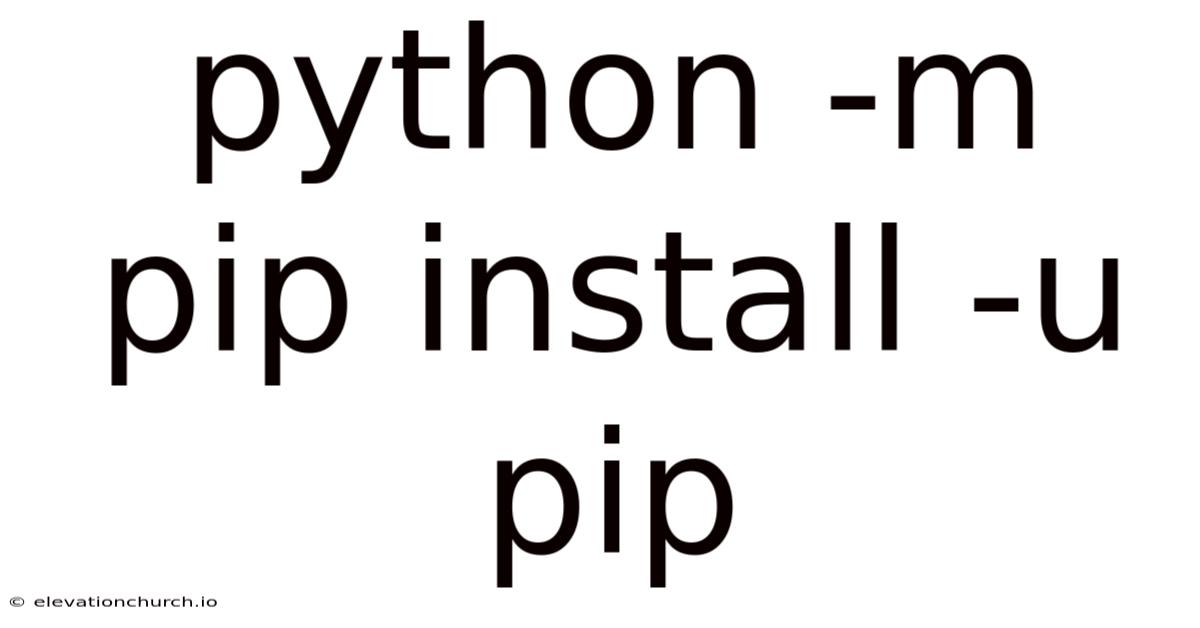
Upgrading Pip with python -m pip install -u pip: A complete walkthrough
The command python -m pip install -u pip serves as one of the most reliable methods for updating your Python package manager within the same environment where you're currently running your code. In real terms, understanding why this approach matters and how to implement it correctly can significantly improve your development workflow, especially when working across multiple virtual environments or shared systems. Also, by mastering this command, developers gain greater control over dependency management and ensure they always have access to the latest version of pip, which contains critical security patches and performance improvements. This technique leverages the built-in module system to invoke pip programmatically rather than relying on the potentially outdated global configuration of the pip executable. Think about it: whether you're setting up a fresh project or maintaining an existing codebase, keeping your pip toolchain current is essential for smooth installation processes and avoiding compatibility issues with newer Python versions. This guide walks you through everything you need to know about executing python -m pip install -u pip effectively and safely.
Introduction
When developing software projects, proper package management is fundamental to ensuring stability, reproducibility, and security. Instead, using python -m pip install -u pip provides a more strong solution by explicitly invoking the pip module within the active Python interpreter. On the flip side, over time, older versions of pip may accumulate bugs, deprecations, and security vulnerabilities that could impact your application's integrity. In real terms, this method guarantees that the upgrade happens in the context of the current environment, preventing conflicts between different Python installations. The recommended way to address this is not simply running pip install --upgrade pip, which can sometimes fail due to path conflicts or permission issues. Python's standard library includes pip, a powerful command-line tool designed to install, update, and manage Python packages. That said, additionally, the -u flag stands for "update," instructing pip to fetch the newest version available from PyPI (Python Package Index). Because of that, this approach becomes a cornerstone of best practices for maintaining an up-to-date development environment.
Steps
Updating pip with python -m pip install -u pip involves several straightforward steps that anyone familiar with basic terminal usage can follow. You should see an updated version number reflected in the output, confirming that the upgrade was successful. Which means if you encounter permission errors, you may need to run the command with elevated privileges using sudo on Unix-based systems or by adjusting your file permissions accordingly. After the command completes successfully, verify the new version of pip by running python -m pip --version. Consider this: for teams requiring consistency across multiple machines, consider documenting this procedure and sharing it via team wikis or documentation repositories. Practically speaking, first, open your preferred command-line interface (such as Terminal on macOS/Linux or Command Prompt/PowerShell on Windows). Also, second, handle to the root directory of your project or the specific environment where you want to perform the upgrade. Third, execute the command python -m pip install -u pip. Remember that each time you create a new virtual environment using tools like venv or conda, this command will apply automatically within that isolated space, making it an invaluable scriptable step in your deployment pipeline That alone is useful..
Scientific Explanation
From a technical perspective, the difference between pip install --upgrade pip and python -m pip install -u pip lies in how the pip command is invoked. The former relies on locating and executing the pip executable directly from the PATH variable, which can lead to inconsistencies when multiple Python installations coexist on a system. The latter approach uses the -m flag, telling Python to treat the specified string as a module name and import it accordingly. This ensures that you're always interacting with the pip module associated with the specific Python interpreter currently running, eliminating ambiguity. The -u option further reinforces this intent by explicitly requesting an update operation. That said, under the hood, pip performs a series of checks before proceeding—verifying network connectivity, downloading the latest package metadata, and comparing installed files against the repository versions. When a newer version exists, pip downloads the binary distribution compatible with your platform and architecture, then replaces the old installation. This systematic approach minimizes risks such as partial updates or corrupted installations that might occur with manual intervention. Also worth noting, because pip operates within the current Python environment, any side effects (like modifying site-packages directories) remain contained, preserving the isolation principles that modern Python packaging advocates It's one of those things that adds up..
FAQ
Q: Can I use python -m pip install -u pip in Jupyter Notebooks?
A: Yes, absolutely. Since Jupyter kernels typically launch a separate Python process tied to the kernel specification, invoking python -m pip install -u pip inside a notebook cell will work perfectly when pip is already initialized in that session. Just ensure your environment has sufficient permissions to modify pip's location.
Q: What if I receive an error saying "No module named 'pip'"?
A: This typically indicates that your Python installation lacks pip or it was uninstalled accidentally. To resolve this, first check if pip exists by running python -c "import pip; print(pip.__version__)". If it fails, try reinstalling pip with python -m ensurepip --upgrade followed by the upgrade command mentioned above That's the part that actually makes a difference..
Q: Does this command affect my system-wide Python installations?
A: No, because the -m flag binds the action specifically to the current Python interpreter. System-wide changes would require administrator privileges and a different execution model (e.g., using sudo), which is generally unnecessary for personal projects. Stick to the local approach for safety and portability The details matter here..
Q: How often should I run this update? A: It's advisable to check for pip updates periodically, ideally after major OS updates or when encountering unexpected dependency resolution failures. Automated CI/CD pipelines can also incorporate this step to ensure consistent build environments across all contributors Most people skip this — try not to..
Conclusion
Mastering python -m pip install -u pip empowers developers to maintain a healthy, secure, and efficient Python ecosystem throughout their projects. By understanding both the practical steps and the underlying mechanics of this command, you can confidently integrate it into
your daily development workflow. That's why ultimately, this small but vital maintenance habit safeguards your projects from unnecessary friction, allowing you to focus entirely on writing great code. An up-to-date pip not only grants you access to the latest security patches and performance improvements but also ensures that dependency resolution remains strong against evolving package standards. Keep your tools sharp, and your Python journey will be all the smoother for it.
